

Autonomous Systems Fail Less on Algorithms: and More on Human Interfaces
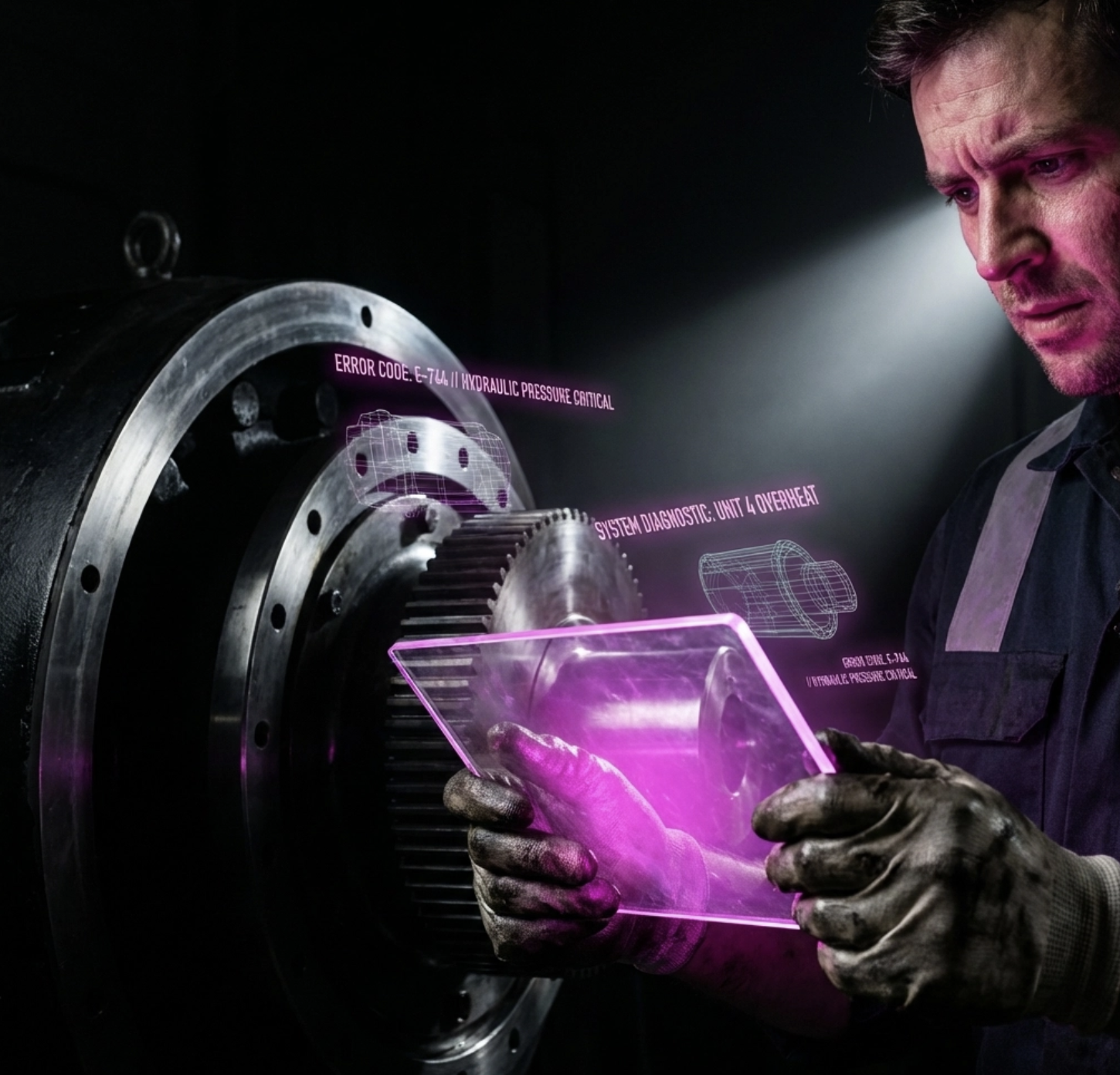
The 2026 R&D incentives have created a fascinating paradox. Companies are doubling down on autonomous systems: pouring millions into machine learning models, sensor fusion, and predictive algorithms. Yet the biggest barrier to deployment isn't computational power or algorithmic sophistication. It's whether a forklift operator in Ohio trusts the system enough to use it.
This disconnect reveals a fundamental bias in how industrial R&D approaches autonomy. We optimize for intelligence when we should be designing for adoption.
The Algorithm-First Bias That's Costing Millions
Walk into most autonomous systems R&D labs, and you'll find teams obsessing over edge cases in computer vision, training data quality, and model accuracy. These are critical technical challenges, but they're not usually what kills deployments.
The real failure point happens six months after go-live, when the maintenance technician bypasses the predictive analytics dashboard because it's too complex, or when fleet operators disable the autonomous routing because they don't understand why the system makes certain decisions.
Research from the National Institute of Standards and Technology reveals that many AI system failures aren't rooted in algorithmic deficiencies: they're communication and interface breakdowns. What appears to be "human error" often stems from poor design that prevents users from understanding or trusting the system.
Consider the aerospace industry, where advanced autopilot systems have existed for decades. The technology works brilliantly: until a critical moment when pilots need to take control but can't quickly interpret what the system was doing or why it's handing control back. The Tempe self-driving car incident wasn't just about sensor limitations; it highlighted how poor human-machine interface design can compound technical failures.
The Hidden R&D Blind Spots
Most autonomous systems R&D funding flows toward three areas: perception, decision-making, and control systems. But deployment success hinges on three entirely different factors that rarely get adequate R&D investment:
Trust Calibration
Operators need to understand not just what the system is doing, but why it's confident or uncertain about its decisions. A robotic welding system might have 99.7% accuracy, but if welders can't quickly assess when the system needs human intervention, that precision becomes irrelevant.
Current R&D approaches typically treat trust as a "soft skill" problem solved through training. But trust is actually a design challenge. Users need transparency about system limitations, clear feedback about decision-making processes, and intuitive ways to intervene when needed.
Maintenance Workflows
Autonomous systems don't maintain themselves: yet R&D rarely designs for the technician who will troubleshoot failures at 2 AM. Most predictive maintenance interfaces are built for data scientists, not the industrial electricians who actually fix the equipment.
The result? Sophisticated diagnostic algorithms that generate alerts nobody knows how to act on, creating expensive systems that teams work around instead of with.
Workforce Integration
The most overlooked R&D blind spot is upskilling design. Companies assume they can bolt training onto existing autonomous systems, but workforce adaptation needs to be designed from the ground up.
Effective autonomous systems don't eliminate human jobs: they transform them. A warehouse robot doesn't replace material handlers; it turns them into robot supervisors who need different skills and interfaces. But if R&D doesn't design for this transition, even brilliant technology becomes organizationally impossible to deploy.
What Real-World Design Looks Like
Designing autonomous systems for actual operators, technicians, and safety personnel requires a fundamentally different R&D approach: one that starts with human needs instead of technical capabilities.
Designing for Operators
In manufacturing environments, operators don't need to understand machine learning models. They need to quickly assess whether the system is working correctly and intervene confidently when it isn't. This requires interfaces that communicate system state, confidence levels, and intervention points clearly.
One automotive manufacturer redesigned their robotic assembly interfaces after realizing operators were disabling automation during complex procedures. Instead of more sophisticated algorithms, they needed better visual feedback about robot intentions and simpler override controls. Productivity increased 23% not through better AI, but through better human-machine communication.
Designing for Technicians
Maintenance teams interact with autonomous systems differently than operators. They need diagnostic information, historical performance data, and clear troubleshooting workflows. But most industrial AI systems provide either too much technical detail or too little actionable information.
Effective designs present information in layers: basic status for daily checks, detailed diagnostics for problem-solving, and system-level insights for optimization. AR interfaces are particularly powerful here, overlaying diagnostic information directly onto physical equipment.
Designing for Safety
Safety-critical environments require special attention to human factors in autonomous system design. Emergency shutdown procedures, failure mode communication, and human override capabilities can't be afterthoughts: they need to be core design requirements from day one.
This means R&D teams need safety professionals, operators, and maintenance staff involved in design decisions, not just algorithm development. Human factors expertise becomes as critical as machine learning expertise.
How 2026 R&D Incentives Align With Human-Centered Design
The updated R&D tax incentives reward deployment and scale, not just research. This creates powerful alignment between business incentives and human-centered design approaches.
Companies that design autonomous systems for real workforce integration will see faster deployment cycles, higher adoption rates, and better ROI on their R&D investments. The tax benefits compound when systems actually get used instead of sitting on pilot project shelves.
Workforce-focused R&D spending now qualifies for enhanced incentives, recognizing that human capital development is as critical as technical development for industrial competitiveness. This includes AR/VR training systems, human-machine interface design, and change management approaches: exactly the areas that determine autonomous system adoption success.
Building Trust Through Design
At Humanity Innovation Labs, we've seen this pattern repeatedly: companies with sophisticated algorithms struggling to deploy because they skipped human-centered design. Our approach integrates workforce considerations into R&D from the beginning.
Our human-AI interaction design process maps how different roles will interact with autonomous systems, identifies trust and usability requirements, and designs interfaces that support both daily operations and edge-case situations. We use participatory research methods to involve actual operators and technicians in design decisions.
Our AR/VR training systems don't just teach people how to use new technology: they're designed to build confidence and trust through hands-on practice with failure scenarios and intervention procedures. This training becomes part of the system design, not an add-on.
For operational UX, we focus on designing information architecture that supports decision-making under pressure. This means clear visual hierarchies, intuitive controls, and feedback systems that communicate both what's happening and what users should do about it.
The Path Forward
The future belongs to autonomous systems that humans trust, understand, and can effectively supervise. This requires R&D approaches that balance algorithmic sophistication with human factors design.
Companies investing in 2026 R&D have an opportunity to lead this shift. Instead of optimizing purely for technical performance, they can design for deployment success by putting human needs at the center of autonomous system development.
Autonomy only works if humans trust and understand it. We design for that reality. Ready to turn your autonomous system R&D into something people actually want to use? Let's build human-trusted autonomous systems together.