

Fragile by Design: Why Most Industrial MVPs Aren't Built for the Reality of Scale
The demo went flawlessly. Leadership applauded. The pilot site reported promising metrics. Six months later, the MVP sits in limbo: technically functional, operationally abandoned, and quietly bleeding budget.
This isn't a failure of technology. It's a failure of design.
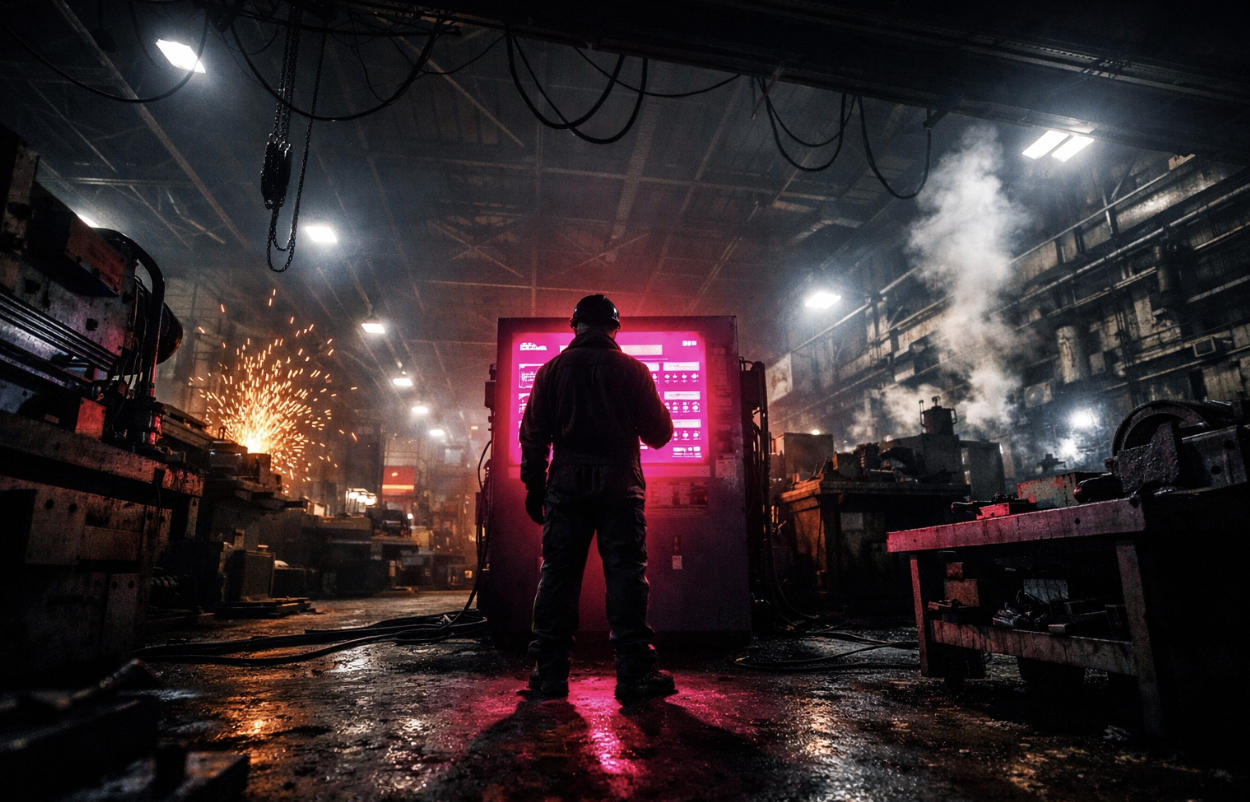
Most industrial MVPs are built to prove a concept, not to survive reality. They're optimized for controlled environments, friendly users, and best-case scenarios. Then they meet the factory floor, the field technician, the third-shift operator who wasn't consulted during development: and they break.
Not catastrophically. Quietly. Through workarounds, resistance, and the slow erosion of adoption that transforms promising innovation into expensive shelfware.
If your organization has watched R&D investments stall between pilot and production, you already know this pattern. The question is: why does it keep happening, and what does it take to build MVPs that actually scale?
The MVP Myth: Validation Is Not Viability
The lean startup movement gave us a powerful framework: build fast, validate assumptions, iterate. For consumer apps and digital products, this approach revolutionized how teams bring ideas to market.
But industrial environments aren't consumer markets. And the MVP playbook that works for a mobile app will systematically fail when applied to manufacturing software, robotics interfaces, or autonomous systems.
Here's why: in industrial contexts, the cost of iteration is exponentially higher. You can't A/B test on a production line. You can't push updates to equipment operators mid-shift without consequences. And you can't assume that early validation in a controlled pilot translates to adoption at scale.
The fundamental error is treating "minimum viable" as permission to defer the hard questions: questions about workflow integration, operator trust, maintenance requirements, and operational constraints. These aren't features to add later. They're foundational to whether your product can exist in the real world.
When industrial teams build MVPs using consumer-grade assumptions, they create products that are fragile by design. Not because the technology is weak, but because the design never accounted for the forces that scale will inevitably apply.
Three Fracture Points Where Industrial MVPs Break
Understanding why MVPs fail to scale requires examining where the fractures occur. In our work with industrial organizations across manufacturing, robotics, and autonomous systems, we see the same three failure patterns repeatedly.
1. The User Gap
Most industrial MVPs are designed by engineers for engineers. The actual end users: operators, technicians, maintenance crews: are consulted late or not at all. Their workflows, constraints, and mental models are assumptions, not insights.
This creates products that make perfect sense in a design review and zero sense on a factory floor. The interface assumes uninterrupted attention when the operator is managing six concurrent tasks. The workflow assumes digital-first behavior from a workforce trained on analog systems. The feedback mechanisms assume users will report issues through official channels instead of developing workarounds.
By the time these gaps surface, the MVP has already "succeeded" in pilot, and the team is surprised when broader rollout meets resistance.
2. The Environment Gap
Pilots happen in protected conditions. Someone is watching. Support is available. The best operators are selected. Edge cases are manually handled.
Scale happens in chaos. Third shifts with skeleton crews. Legacy equipment that doesn't integrate cleanly. Environmental conditions: temperature, noise, connectivity: that the pilot site didn't have. Users who weren't trained and don't want to be.
MVPs designed for pilot conditions encode assumptions about their operating environment that become liabilities at scale. The system that performed beautifully with consistent connectivity fails silently when the warehouse WiFi drops. The interface that worked for trained users becomes a safety risk when someone encounters it without onboarding.
3. The Operations Gap
Perhaps the most overlooked fracture point: most MVPs are designed as if deployment is the finish line. But for industrial software, deployment is where the real work begins.
Who maintains this system? Who trains new users? Who handles updates without disrupting production? Who owns the relationship between this tool and the twelve other systems it needs to integrate with? What happens when something breaks at 2 AM?
These operational realities aren't afterthoughts: they're determinants of whether your product survives contact with the organization. MVPs that defer operational design create products that might work but can't be sustained.
Why Technical Teams Miss These Problems
If these failure patterns are predictable, why do smart teams keep walking into them?
The answer lies in how industrial R&D is typically structured. Technical teams are measured on technical milestones: Does it work? Does it meet specifications? Can we demonstrate the capability? These are important questions, but they're insufficient questions.
Adoption isn't a technical problem. It's a human and operational problem. And most R&D processes aren't designed to surface human and operational risks until it's too late to address them efficiently.
The result is a systematic blind spot. Teams build impressive technology that validates the core hypothesis while accumulating design debt in the areas that actually determine scalability. By the time the debt comes due: during scale-up: the cost of correction has multiplied.
This isn't a criticism of technical teams. It's a recognition that the skills required to build innovative technology aren't the same skills required to design for adoption and scale. Both are necessary. Most R&D processes only resource the first.

Building MVPs That Survive Scale
The alternative isn't to abandon MVPs or slow innovation to a crawl. It's to redefine what "viable" means in industrial contexts.
A truly viable industrial MVP isn't just technically functional. It's designed with clear answers to three questions:
Who will actually use this, and under what conditions? Not ideal users in pilot conditions: real users in real environments with real constraints. This requires participatory research before design begins, not usability testing after the product is built.
What does this system require to operate sustainably? Not just technical infrastructure: human infrastructure. Training, support, maintenance, integration, governance. If you can't articulate the operational model, you haven't designed a scalable product.
What are the known risks to adoption, and how are we mitigating them? Every industrial deployment faces resistance. From change-averse users, from competing priorities, from organizational inertia. Products designed for scale anticipate this resistance and design for it explicitly.
These questions shift the MVP from a technology demonstration to a scale rehearsal. You're not just proving the concept works: you're proving it can work at the scope, pace, and conditions your organization actually operates in.
The Readiness Question
Most industrial organizations don't lack innovative ideas. They lack the ability to move ideas from pilot to production without losing momentum, budget, or stakeholder confidence.
The fix isn't more innovation. It's better assessment of what's actually ready to scale: and honest recognition of what isn't.
This means evaluating R&D investments not just on technical merit, but on adoption readiness and operational viability. It means building research, design, and operational thinking into the R&D process from the start, not bolting it on after the technology is built. And it means treating scale as a design constraint, not a deployment phase.
Industrial R&D fails not because of technology, but because it's not designed for real users or scale. The organizations that win are the ones willing to ask the hard questions early: before the MVP becomes too expensive to fix and too fragile to survive.
If this sounds familiar, start with an R&D Readiness Assessment. Before you invest further in scaling a pilot or advancing an MVP, we help you assess whether it's actually ready: technically, operationally, and humanly.