

R&D Tax Incentives Won't Fix Broken Industrial MVPs: But Better Design Will
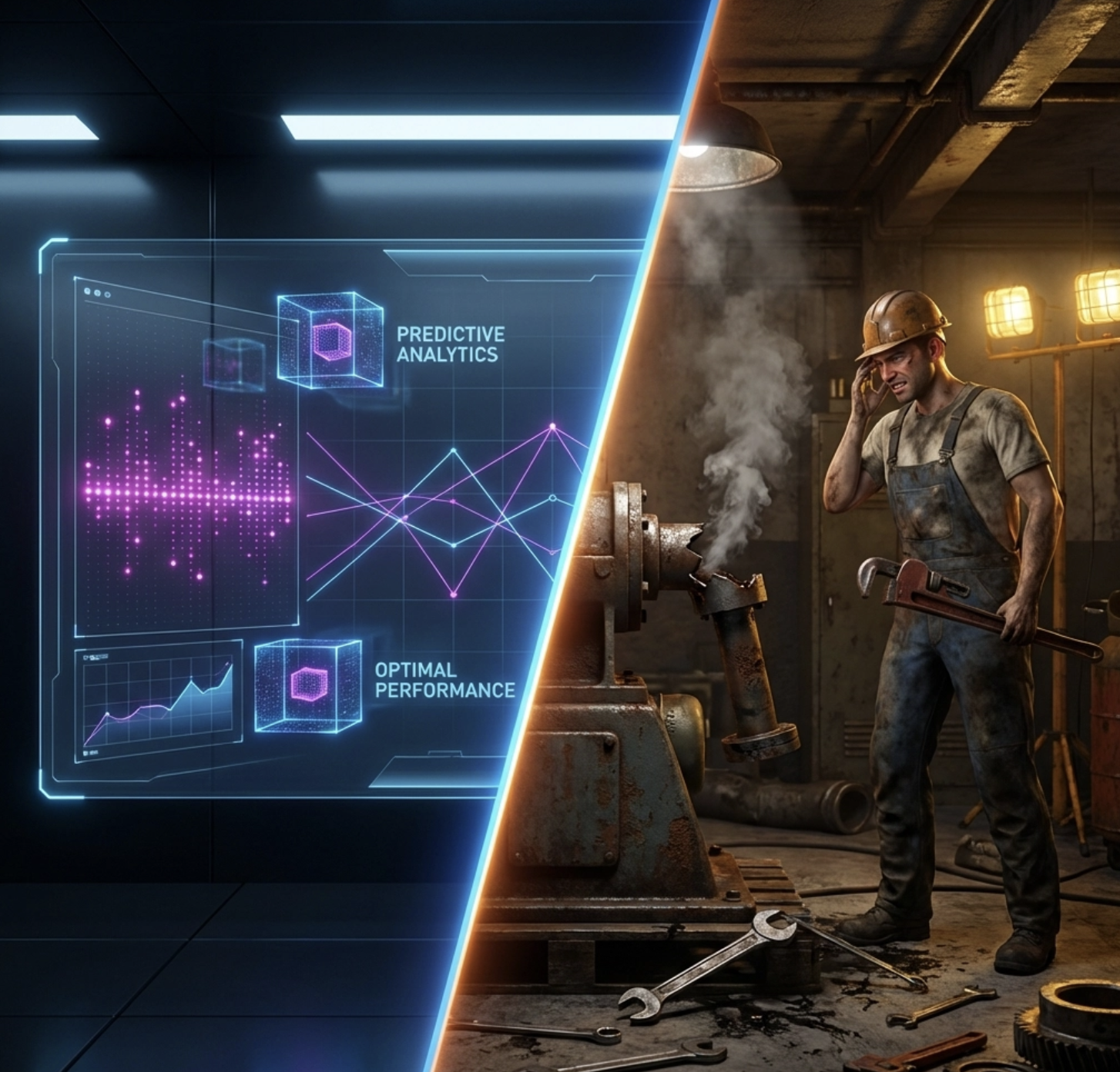
The 2026 R&D landscape has shifted dramatically. Tax incentives now reward companies that move beyond pilot programs to scalable, production-ready systems. Yet across manufacturing floors and automation facilities, a troubling pattern emerges: MVPs that consume R&D budgets but never graduate to full deployment.
Money doesn't solve bad system design: it amplifies it. While R&D tax incentives increase business innovation spending, their impact on meaningful industrial transformation remains mixed. The real bottleneck isn't funding; it's the fundamental disconnect between how industrial systems are conceived and how they must actually function in production environments.
The MVP Graveyard: Where Good Ideas Go to Stall
Industrial MVPs fail at predictable chokepoints. Understanding these failure modes is crucial for any manufacturing or automation company looking to maximize their R&D investment in 2026.
Siloed Development Teams
Most industrial MVPs emerge from engineering teams working in isolation. Hardware engineers focus on sensors and control systems. Software developers build dashboards and analytics platforms. Meanwhile, operators: the people who will actually use these systems: remain completely disconnected from the development process.
This separation creates solutions that work beautifully in controlled environments but crumble when deployed on actual factory floors. A smart manufacturing system might generate perfect data visualizations that plant supervisors can't interpret during shift changes. An automation interface might require tablet navigation that maintenance technicians can't perform while wearing safety gloves.
Legacy System Integration Nightmares
Industrial environments rarely offer clean-slate implementations. Every MVP must integrate with decades-old PLCs, SCADA systems, and enterprise software that nobody fully understands anymore. Development teams consistently underestimate this complexity, building solutions that assume modern API connectivity and real-time data flows.
When integration reality hits, MVPs require complete architectural overhauls. What looked like a six-month deployment becomes an eighteen-month systems engineering project. By then, the original business case has evaporated, and stakeholder enthusiasm has shifted to the next shiny pilot program.
Operator Experience as an Afterthought
The most fatal flaw in industrial MVP development: designing for engineers instead of operators. Brilliant predictive maintenance algorithms become worthless when maintenance crews can't understand the alerts. Sophisticated robotics systems fail when operators don't trust the autonomous functions.
Industrial environments demand solutions that work for people wearing safety equipment, operating under time pressure, and managing multiple concurrent systems. MVPs that ignore these human factors never survive contact with real operational requirements.
Case Studies: When MVPs Meet Reality
Smart Factory Tools That Nobody Uses
Consider a typical smart factory dashboard implementation. The MVP delivers impressive real-time visualization of production metrics, equipment status, and quality indicators. Engineering teams celebrate the successful data integration and clean user interface.
Six months later, floor supervisors still rely on paper checklists and verbal handoffs. The dashboard requires three minutes of navigation to find critical information that supervisors need in fifteen seconds. Alert systems generate so many notifications that operators learn to ignore them entirely.
The technical implementation succeeded perfectly. The human implementation failed completely.
Predictive Maintenance Platforms Without Maintenance Context
Predictive maintenance represents one of the most promising industrial automation applications. MVPs typically focus on sensor integration and machine learning algorithms that can predict equipment failures weeks in advance.
Yet these systems consistently stall in pilot mode because they ignore maintenance workflow realities. Maintenance teams operate with limited time windows, specific tool requirements, and complex part procurement processes. A system that predicts bearing failure in two weeks becomes useless if replacement parts require three weeks to order and install.
Effective predictive maintenance requires designing around maintenance team capabilities, not just algorithmic accuracy.
Robotics Interfaces That Operators Don't Trust
Autonomous and semi-autonomous robotics systems face unique adoption challenges. MVPs often demonstrate impressive technical capabilities: precision movement, adaptive behavior, and sophisticated safety systems. But deployment stalls when operators refuse to work alongside systems they don't understand or trust.
Trust requires transparency, predictability, and clear human override capabilities. Robotics MVPs that prioritize algorithmic sophistication over human-machine interaction consistently fail to scale beyond demonstration environments.
The Design-First Alternative: Participatory R&D
The solution isn't more sophisticated technology: it's more sophisticated development processes. Participatory, cross-disciplinary R&D accelerates scale by designing for production realities from day one.
Involving Operators in Requirements Definition
Successful industrial MVP development begins with deep operator engagement. This means spending time on production floors, understanding workflow pressures, and identifying the specific moments when technology can provide genuine value.
Operators possess critical knowledge about system requirements that engineers never discover in laboratory environments. They understand which data points matter during crisis situations, how different shift teams communicate, and which interface elements must remain accessible while wearing protective equipment.
Cross-Disciplinary Design Teams
Breaking down silos between hardware, software, and human factors engineering dramatically improves MVP success rates. When mechanical engineers understand interface requirements and UX designers understand sensor limitations, solutions emerge that work holistically rather than requiring painful integration compromises.
This approach requires dedicated project structures that incentivize collaboration rather than individual domain optimization. Teams must share success metrics and iterate together rather than optimizing separate subsystems in isolation.
Designing for Legacy Integration From Day One
Treating legacy system integration as a core design constraint rather than an implementation detail transforms MVP viability. This means understanding existing data flows, respecting established operational procedures, and building solutions that enhance rather than replace functional workflows.
Legacy integration complexity should drive interface design decisions, not complicate them afterward. Systems designed with integration constraints in mind typically require less dramatic modification during production deployment.
How Better Design Amplifies R&D Investment
R&D tax incentives create unprecedented opportunities for manufacturing and automation innovation. But these incentives amplify whatever foundation already exists. Companies with strong design practices will scale breakthrough innovations. Companies with weak design practices will scale expensive failures.
Reducing Time-to-Production
Well-designed MVPs transition to production faster because they account for real deployment requirements from initial conception. Rather than discovering integration challenges and usability problems during pilot expansion, design-first approaches surface and solve these issues during early development phases.
This acceleration directly improves R&D ROI. Faster production deployment means earlier revenue generation and reduced total development costs. Tax incentives maximize impact when they fund development processes that reliably produce deployable results.
Increasing Adoption Success Rates
Industrial technology adoption depends entirely on operator acceptance and workflow integration. MVPs designed through participatory processes achieve higher adoption rates because they solve actual operator problems rather than theoretical engineering challenges.
Higher adoption rates justify larger R&D investments and support more ambitious innovation roadmaps. Companies that reliably deploy successful industrial systems can pursue more sophisticated automation and intelligence initiatives.
Building Scalable Technology Platforms
Design-first MVP development creates reusable technology foundations rather than one-off solutions. When teams understand integration requirements and operator needs across multiple use cases, they build systems that can extend to additional applications without complete redevelopment.
Platform scalability transforms R&D investment economics. Rather than funding separate development efforts for each new application, companies can extend proven foundations to address expanding industrial automation requirements.
The Path Forward: From Pilot Purgatory to Production Success
2026's R&D incentive structure rewards deployment over experimentation. Manufacturing and automation companies that embrace participatory design processes will capture the full value of these incentives. Those that continue funding technically sophisticated but operationally naive MVPs will discover that money can't solve fundamental design problems.
The choice is straightforward: invest R&D dollars in engineering excellence that includes human factors, legacy integration, and operational reality: or continue funding pilot programs that never reach production scale.
If your MVP is stuck between pilot and production, we help teams close that gap. Through participatory research, industrial UX/UI design, and integrated hardware-software development, Humanity Innovation Labs™ transforms promising innovations into deployable industrial systems that operators actually use and trust.
The R&D incentives are there. The technology capabilities exist. The only question is whether your development approach is designed for production success or demonstration theater. In 2026, that distinction determines everything.